For many couples from Ireland and the UK, a wedding simply isn't a wedding without the church. The good news is that Sicily is one of the most beautiful places in the world to marry in the Catholic faith, from golden Norman cathedrals to little parish churches by the sea. If you're dreaming of a church wedding in Sicily, this guide explains how it works, what to start at home, and how we help you bring it all together.
We're Marry Me in Sicily: Lina plans with you from the UK, and Sabina is on the ground in Sicily, speaking to the parish and the town hall in Italian. We've planned Catholic weddings here ourselves, so we know how it works in practice.
Why Irish and UK Catholic couples choose Sicily
Sicily is deeply Catholic. Church bells, feast-day processions and centuries-old churches are part of everyday life, so a church wedding here feels natural rather than staged, with sunshine, sea views and a Sicilian party to follow.
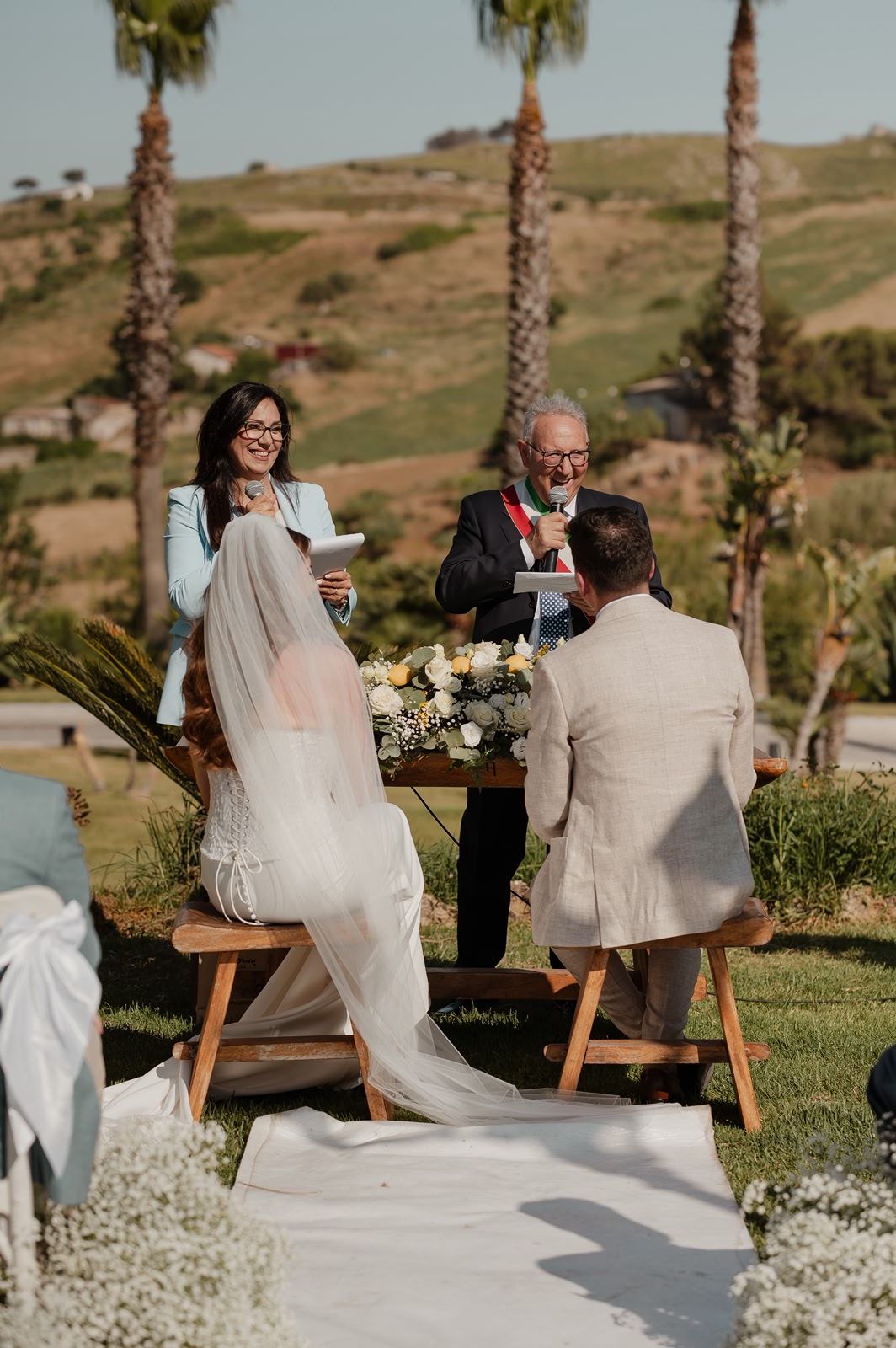
A Catholic wedding can also be legally recognised. The priest reads the relevant articles of the Italian Civil Code during the ceremony, and the parish sends the marriage record to the comune (town hall), normally within five days, so it can be registered. If you're still deciding, our guide to civil vs religious weddings in Sicily compares the options.
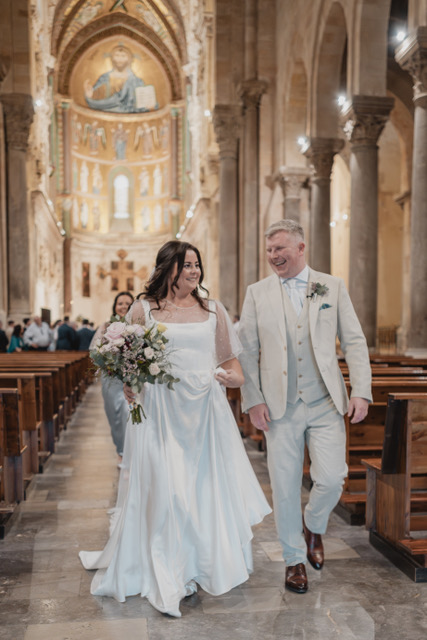
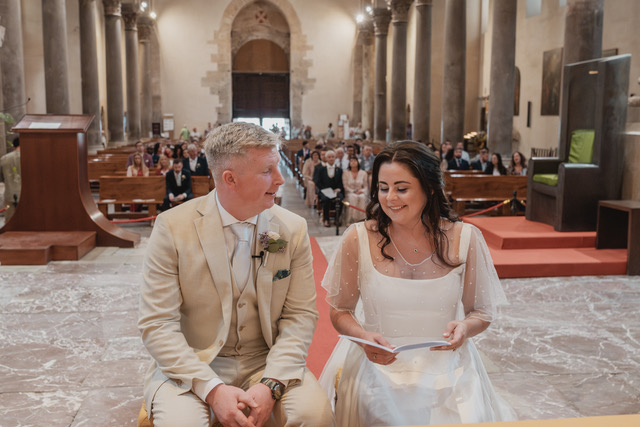
A real Irish wedding at Cefalù Cathedral
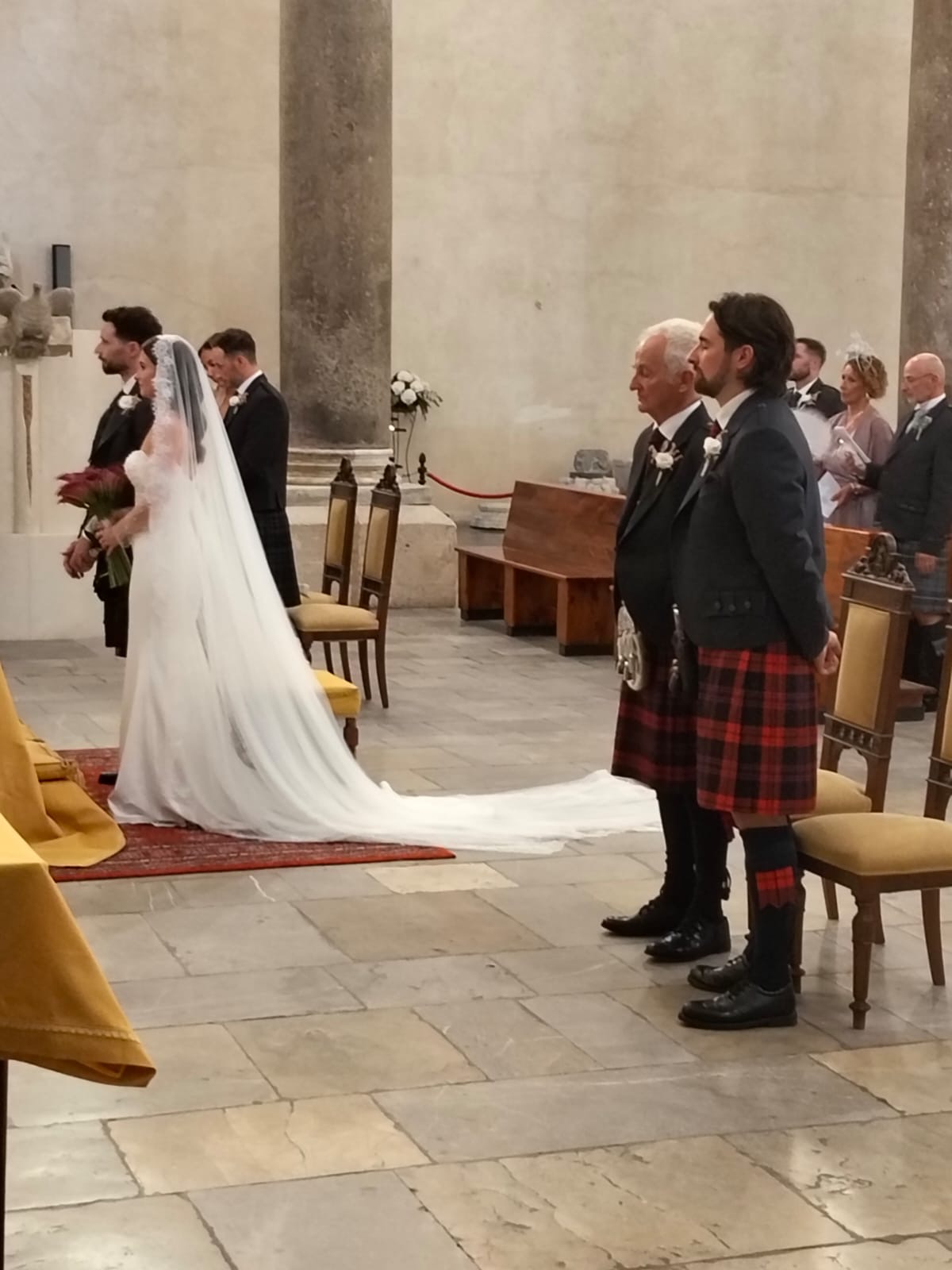
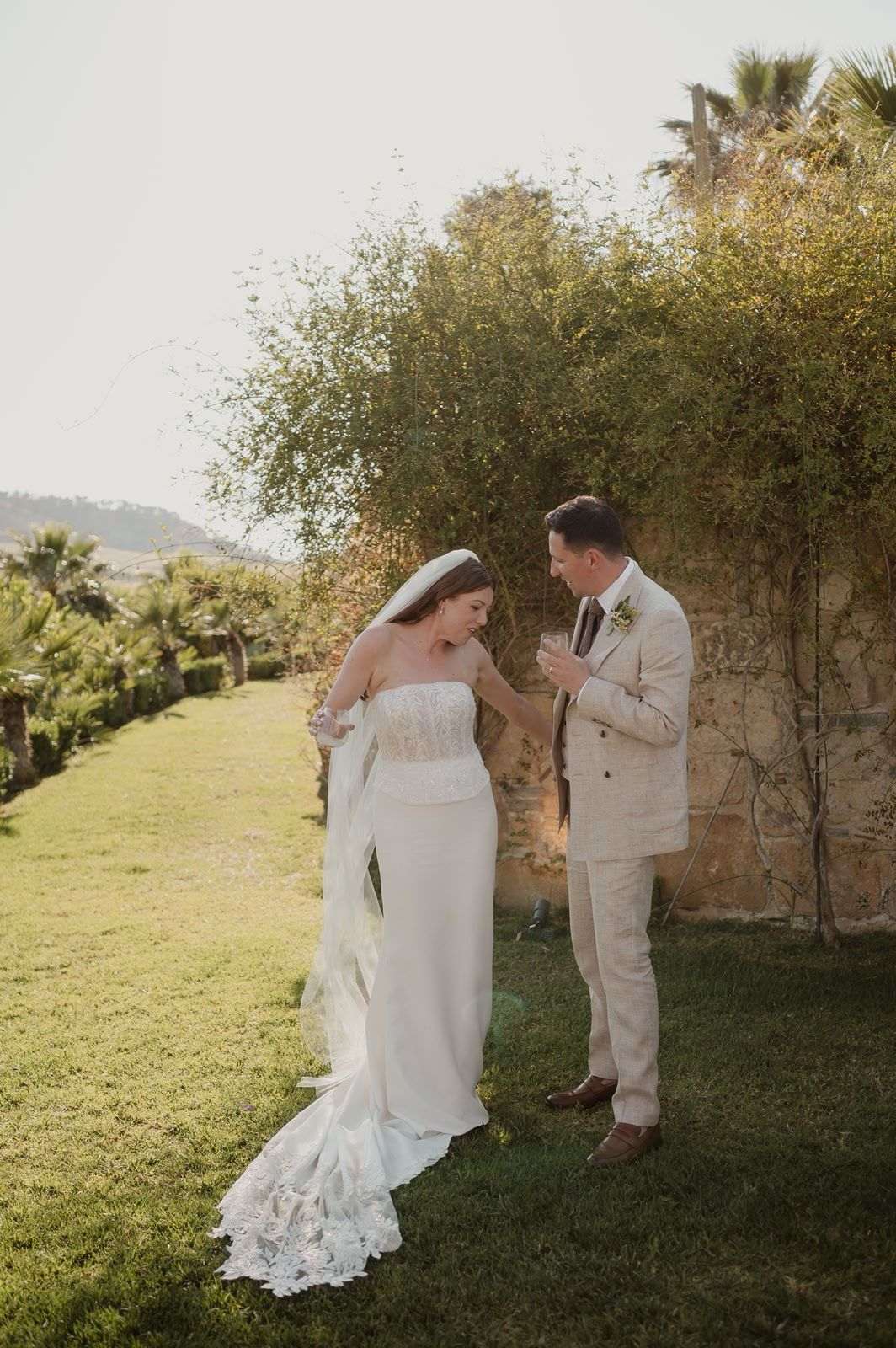
Gráinne and Phil came to us from Ireland with a clear picture of the day they wanted. Their Catholic ceremony took place in the Duomo di Cefalù, the Norman cathedral that has stood for more than eight hundred years. Afterwards came a toast in the piazza, a vintage car, and a party at Hotel Le Calette on the bay that ran into the early hours. You can see their day in Gráinne and Phil's real wedding story.
Where can you have a church wedding in Sicily?
Almost every town in Sicily has a church that couples fall in love with. A few places our couples often ask about:
- Cefalù. The Arab-Norman cathedral, with its golden Byzantine mosaics, is part of a UNESCO World Heritage site, and the small seaside town is lovely for guests. Read more about getting married in Cefalù.
- Sciacca. A historic fishing town on the south-west coast, where Isabella and Billy married in the Basilica Maria SS. del Soccorso. Their story is in our Catholic wedding in Sciacca guide, and there's more on weddings in Sciacca.
- Palermo, Syracuse, Noto and Taormina. Historic churches in cities and towns full of palazzi, Baroque streets and sea views. See Palermo, Syracuse and Noto and Taormina weddings.
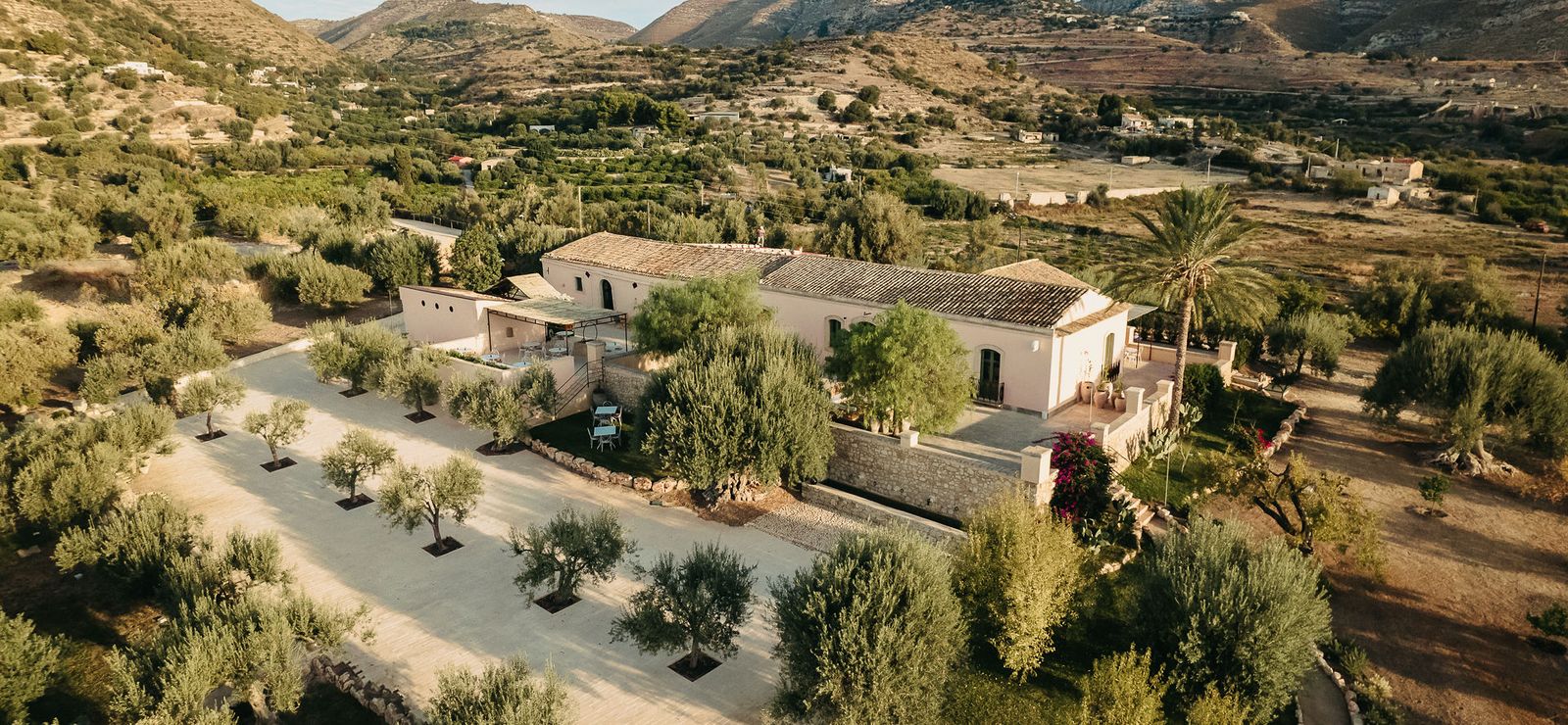
Every church sets its own rules on dates, times, music, flowers, photography and confetti, so we always check with the parish before you fall too far in love with a date. Once the church is agreed, we can help you find a reception nearby, whether that's a seafront hotel or one of the Sicilian wedding venues we love.
The church paperwork: what to start at home
Your church file begins with your own parish at home, in Ireland or the UK. Requirements vary by parish and diocese, so treat this as a general guide and speak to your priest early.
Meeting your parish priest
Your home parish prepares your pre-nuptial file (sometimes called the pre-nuptial enquiry). You usually meet your priest within the six months before the wedding. Tell them early that you're marrying abroad.
Certificates
- A baptism certificate, recently issued (often dated within six months of the wedding). Ask the parish where you were baptised.
- A confirmation certificate.
- Your priest may also ask for a letter of freedom from any other parish you've lived in as an adult, confirming you're free to marry. Ask what your diocese needs.
Marriage preparation course
Most dioceses ask you to complete a marriage preparation course before the wedding, and you'll get a certificate to add to your file. In Ireland, many couples book a course through ACCORD or their own diocese. These courses can get booked up, so plan it in early.
From your diocese to Sicily
Your home diocese checks the file and grants any permissions, then sends it to the diocese in Sicily, whose Curia stamps it and passes it to your Sicilian parish. Allow several months.
If only one of you is Catholic
Don't let it put you off. When one partner isn't Catholic, the Church asks for a dispensation (permission for a mixed marriage) through the Catholic partner's home parish. It simply needs more time and careful planning, and we've guided couples through it before.
The civil paperwork: Irish and UK citizens
Because your church wedding also has legal effect, you'll need civil documents too. These depend on your citizenship, and in an Irish and British couple each of you follows your own route.
- Irish citizens need a Certificate of Freedom to Marry from the Department of Foreign Affairs. You apply online and post supporting documents, such as your long-form birth certificate. Apply at least four months ahead. For Italy, the DFA sends the certificate to the Irish Embassy in Rome, which translates it and forwards it to your Italian address.
- British citizens give notice at their local register office for a certificate of no impediment (the Italian *Nulla Osta*), which is then apostilled and translated. In England and Wales, notice must be given at least 29 days before the certificate can be issued; Scotland and Northern Ireland run their own registrar systems.
- If one of you is also Italian, the rules change, so tell us early.
Our legal documents guide explains each step. Requirements can change, so always check the current DFA or GOV.UK guidance.
Planning the ceremony itself
Then comes the lovely part. Talk to the parish about whether you'd like a full nuptial Mass or a ceremony without Mass, which readings you'd like and who will read them, and your music. Some couples would love a priest from home to celebrate or concelebrate; this is sometimes possible with the agreement of the local parish and diocese, so ask early. Sabina handles these conversations in Italian, so nothing gets lost in translation.
A tip for guests: Sicilian churches expect modest dress, so shoulders are usually covered inside, and in summer a later-afternoon ceremony is far more comfortable. Our guide to the best time to get married in Sicily can help you choose a date, and you can weave in Sicilian wedding traditions like sugared almonds outside the church.
When to start planning
Church weddings need the longest run-up of any ceremony type. As a guide:
- 12 to 18 months before: agree your church and date with the parish.
- 9 to 12 months before: speak to your parish priest and book your marriage course.
- About six months before: request your baptism certificate, complete your pre-nuptial file and start the civil paperwork.
- The final weeks: we submit documents to the comune and coordinate everything on the ground.
Our full Sicily wedding planning timeline and guest accommodation and travel guide cover the rest.
Would a symbolic ceremony suit you better?
If the church paperwork feels like too much, some couples marry legally at home and have a symbolic ceremony in Sicily instead, almost anywhere they like. Read our symbolic wedding ceremony guide or meet Sabina, our wedding celebrant in Sicily.
How we help
We coordinate the church and the comune together, so you have one clear plan: a checklist built around you, liaison in Italian with the parish, the Curia and the town hall, interpreters, transport and Lina and Sabina there on the day. For packages, please contact us for current rates.
Church Weddings in Sicily: FAQs
Can Irish couples have a Catholic wedding in Sicily?
Yes. Gráinne and Phil came to us from Ireland and married in the Duomo di Cefalù. Your church file starts with your home parish, and the civil side usually means a DFA Certificate of Freedom to Marry.
Is a church wedding in Sicily legally recognised at home?
It can be. With your civil documents in place, the parish sends the marriage record to the comune for registration. Check with your registrar or the DFA about recording it at home.
What documents do we need from our parish?
Usually a recent baptism certificate, a confirmation certificate, a marriage course certificate and a pre-nuptial file, sometimes with letters of freedom. Always check with your own parish.
Can we get married in Cefalù Cathedral?
Yes, couples can marry in the Duomo di Cefalù. It needs Catholic paperwork and the agreement of the cathedral, and we guide you through it. See our Cefalù weddings page.
How far ahead should we start?
Ideally 12 to 18 months ahead for your church and date, with the civil paperwork started at least four months before.
Planning a church wedding in Sicily?
Whether you're picturing a Norman cathedral or a little parish church by the sea, we'd love to help. Tell us where you're from and your rough dates, and we'll explain exactly what's involved. Get in touch to start the conversation.
No Obligation, Just a Conversation
Let’s Plan Your Sicilian Wedding
Tell us about the day you are dreaming of and we will craft a bespoke proposal around your vision, your guests and your budget.