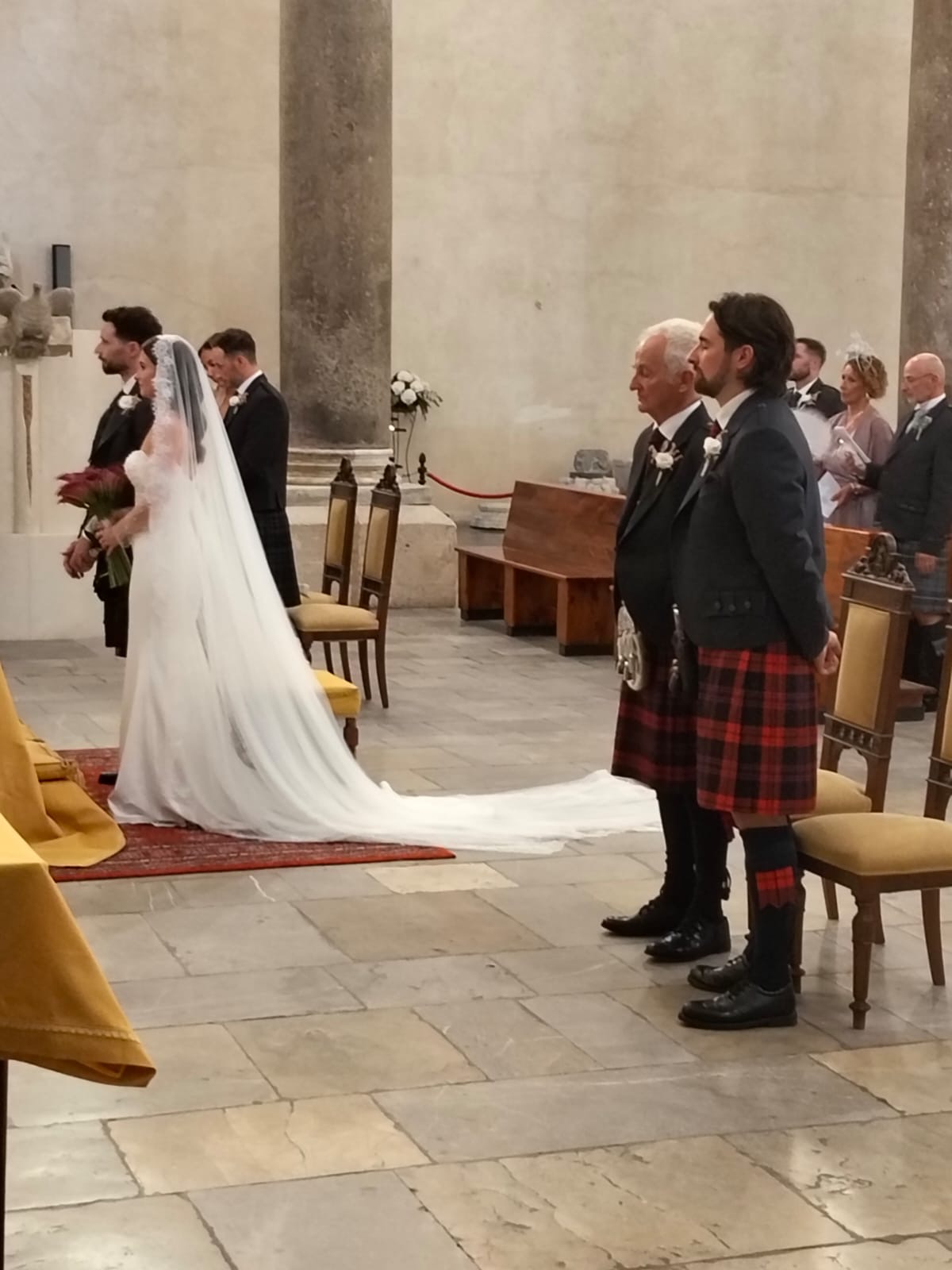
A Catholic wedding in Sicily can be one of the most moving days of your life: a historic church, a Mass in a place where faith is part of everyday life, and a celebration that feels thoroughly Sicilian afterwards. What often takes UK and Irish couples by surprise is not the ceremony itself, but everything that has to happen before it.
You are preparing a church file at home, waiting on a diocese, corresponding with a parish that works in Italian, and lining up civil documents so the marriage can be registered in Italy. It is a lot to hold together from the UK or Ireland, and it is easy to underestimate how much time, chasing and careful wording it takes.
We are Marry Me in Sicily: Lina plans with you from the UK, and Sabina is on the ground in Sicily, speaking to the parish, the Curia and the town hall in Italian. This guide is about why that support matters. For the detailed process and document list, see our church wedding guide for Irish and UK Catholic couples. Our legal documents guide covers the civil side.
It is harder than it looks to manage the church alone
A Catholic wedding in Sicily is not one form and one phone call. It is two tracks that have to meet on the same date: the canonical file that starts with your home parish and travels through your diocese to Sicily, and the civil paperwork that allows the marriage to have legal effect in Italy. If one side is late, incomplete or worded in a way the other office will not accept, the date you have set your heart on can start to slip.
You are also working at a distance. Parish offices can be slow to reply, keep hours that do not line up with a working day in the UK or Ireland, or give different answers on different days. That is rarely a lack of goodwill. Many offices are small, busy, and organised around Mass times and feast days rather than an English-language inbox. From a laptop at home, though, it is tiring and easy to misread.
This is the part couples tell us they would not want to do again on their own. You should be choosing readings, thinking about your guests and looking forward to the day — not wondering whether a file has left one office and arrived at the next.
The paperwork is a file, not a single form
Requirements vary by parish and diocese, so treat what follows as a clear picture of the work involved, not a personal checklist. Your priest at home will tell you exactly what your diocese needs, and we keep both the church and civil sides in view so nothing is left until too late.
What starts with your parish at home
Most UK and Irish dioceses ask you to complete a marriage preparation course, sometimes called a pre-marriage programme, and to add the certificate to your file. In Ireland, many couples book this through ACCORD or their own diocese. Courses can fill up, so it is worth arranging early.
You will usually also need:
- A recently issued baptism certificate, often dated within six months of the wedding, from the parish where you were baptised
- A confirmation certificate, or confirmation recorded on the baptism certificate
- Proof that you are free to marry. This is often a letter of freedom from your home parish, and sometimes from other parishes you have lived in as an adult. Some dioceses accept a signed declaration instead. Practices vary, so always check with your priest
- A pre-nuptial enquiry or file, completed with your parish priest
That church letter of freedom is not the same as the civil document Italian offices call a *nulla osta*. The civil version, for British citizens, is usually a certificate of no impediment after you give notice at your local register office. For Irish citizens it is a Certificate of Freedom to Marry from the Department of Foreign Affairs. Both tracks are needed if you want the church wedding to be your legal marriage as well.
From your diocese to Sicily
Once the file is complete, your home diocese in the UK or Ireland reviews it and grants the necessary permissions. These are often issued as *litterae testimoniales*, sometimes described as a *nihil obstat*. The diocese then sends the papers to the Sicilian diocese. The Curia there stamps them and forwards them to the parish of marriage.
This is not a quick email. The file travels from parish to chancery, then from one country to another, then from the Sicilian Curia to the church you have chosen. Dioceses set their own windows for receiving papers, and it is wise to allow several months. We keep watch on that transfer so a delay in one office does not come as a surprise weeks later.
Banns, translations and civil effect
Canonical banns, known in Italy as *pubblicazioni canoniche*, may need to be published as part of the church preparation. For the marriage to have civil effect, Italian law also provides for publications at the town hall. What the *comune* requires can depend on your circumstances, so we confirm this for your date and place rather than assuming one rule fits every couple.
Documents generally need to be in Italian, or accompanied by a translation the parish and the town hall will accept. A well-meaning translation done at home is not always enough. We arrange the translations that will actually be taken, so a rejected wording does not hold everything up.
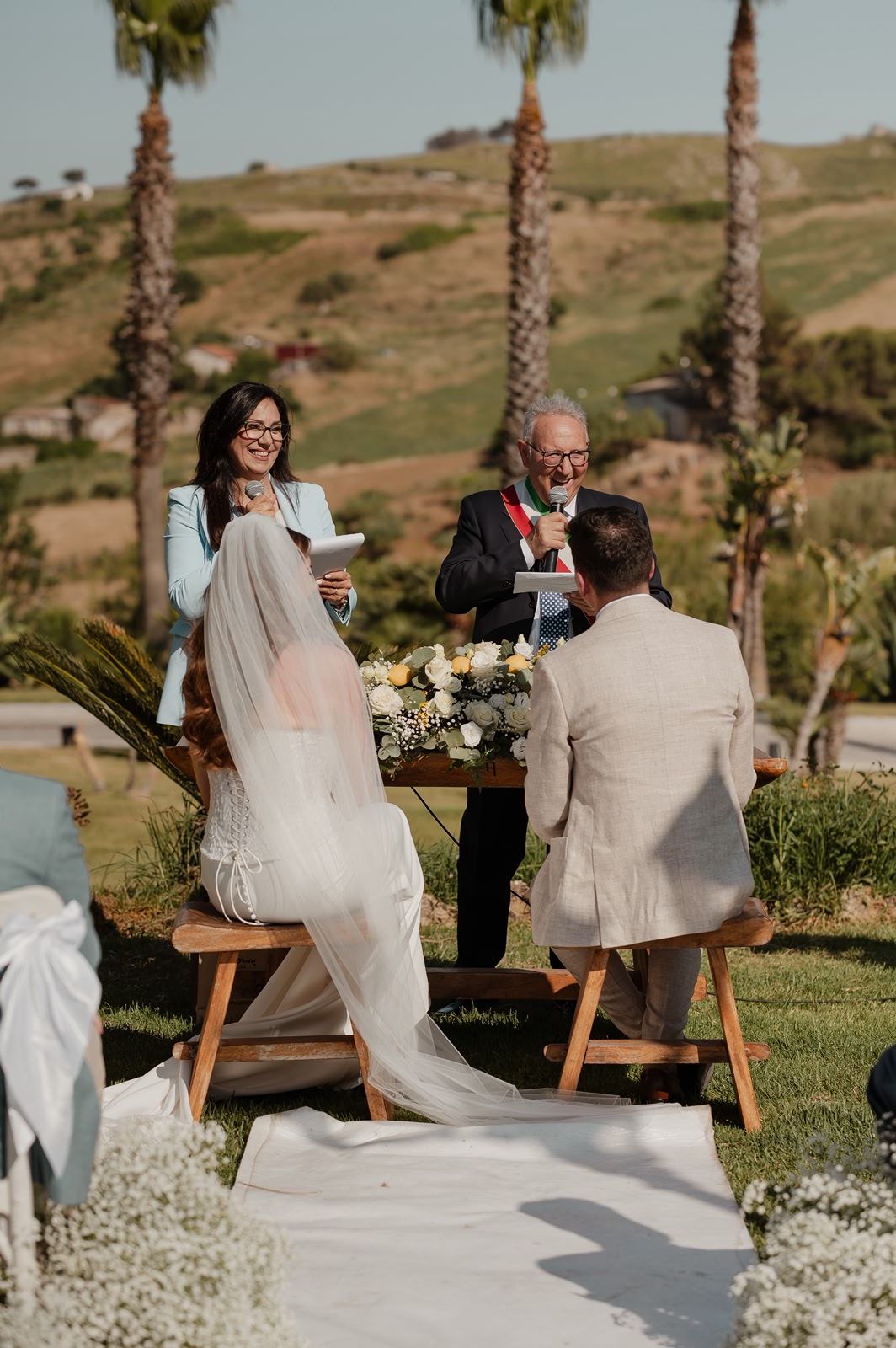
A Catholic wedding in Italy can also be your legal marriage. Under the agreement between Italy and the Holy See — the Concordat, as revised in 1984 and given effect in Italian law — a marriage celebrated according to canon law has civil effects once it is transcribed in the civil registers. During the ceremony the priest reads the relevant articles of the Italian Civil Code, on the rights and duties of spouses. Afterwards the parish is required to request transcription with the *comune* within five days of the wedding. That is why the civil documents, the apostilles and the translations have to be in place as well, not only the church file.
Our legal documents guide explains the civil steps for UK couples, and the church wedding guide sets out the parish and civil paperwork side by side, including the Irish route. Requirements can change, so we always check the current position for you.
If you are still deciding between a church wedding, a civil ceremony or a symbolic celebration, our guide to civil versus religious weddings in Sicily will help you compare.
When the first official answer is not the full picture
It is not unusual to be told, at a town hall, a police station or another local office, that a particular civil step — such as a declaration — is not needed, when in your case it is. The rules are detailed, and they can be applied a little differently from one office to another, so a first answer is not always the complete one. That is not a slight on anyone doing their job. It is simply why we keep asking, and following up, until the position for your wedding is clear.
Parish coordination is a conversation, not a booking
Agreeing a church and a date is only the beginning. Every parish has its own rules on times, music, flowers, photography and what may happen outside the church afterwards. Some churches are glad to offer a full nuptial Mass; others may prefer a ceremony without Mass. None of this is a reason to be put off, but it does need to be asked, in Italian, before you fall in love with a plan the parish cannot support.
Sabina handles those conversations on the ground. She liaises with the parish, follows up when an office has gone quiet, and makes sure the file, the date and the practical details of the ceremony are actually agreed, not just hoped for. Once the church is set, we can help you find a reception nearby. You can browse our venues or tell us the kind of setting you have in mind.
The language barrier is bigger than a few emails
Almost all of this happens in Italian: the parish office, the diocesan Curia, the town hall, and the documents themselves. Even confident Italian speakers can find official church language a stretch. For most UK and Irish couples, the barrier is simply too big to manage alone, and a small misunderstanding has a habit of becoming a delay.
That is why the work is split the way it is. Sabina speaks to everyone in Sicily in Italian. Lina explains it to you in English, clearly and calmly, so you always know what has been asked, what has been sent, and what happens next.
For the Mass itself, we can also organise an English-speaking priest who works with us, so you and your guests can follow the liturgy without a translator. We always confirm this with the parish.
How we help
- A clear plan and checklist, built around you, covering the church file and the civil documents
- Guidance on what to start with your priest at home, and when, including the marriage course, certificates and letters of freedom
- Liaison in Italian with the parish, the diocesan Curia and the town hall, including the transfer of papers from your home diocese to Sicily
- Translations, apostilles and civil paperwork, coordinated so both tracks arrive on time
- An English-speaking priest for the Mass, arranged with the parish, so you do not need a translator during the ceremony
- Help finding a reception near your church, and coordination on the day in Italian
Lina plans with you from the UK; Sabina orchestrates every detail on the ground in Sicily.
What our couples say
“Between them, they helped us navigate all the paperwork and requirements to get married in Italy, which we really would have struggled with on our own.”
— Isabella, Trustpilot, November 2026
“They were phenomenal in helping us organise both our legal and religious ceremonies in Cefalù. From sourcing an English-speaking priest to ensuring all our legal and religious documentation was in order…”
— A couple married in Cefalù, Trustpilot
“They were also excellent in helping us organise both our legal and religious paperwork, a process that I am absolutely certain we would not managed ourselves!”
— Ailie & Andy, Trustpilot, September 2026
Read more reviews on Trustpilot
Catholic wedding planner in Sicily: FAQs
Do we really need a wedding planner for a Catholic wedding in Sicily?
You can begin the parish paperwork at home, but the hard part is joining that file to a Sicilian parish, a diocesan transfer and the civil documents, all in Italian and all in time for your date. A bilingual planner gives you one clear plan and someone on the ground who can speak to the parish when an email is not enough.
What documents do we need for a Catholic wedding in Sicily?
Typically a marriage preparation certificate, a recently issued baptism certificate, a confirmation certificate, proof that you are free to marry, and a pre-nuptial file from your home parish, which your diocese then sends to Sicily. You will also need the civil documents, including a *nulla osta* or Certificate of Freedom to Marry, if the wedding is to be legally registered in Italy. The exact list depends on your circumstances. See our church wedding guide and legal documents guide.
Is a Catholic wedding in Sicily legally recognised?
It can be. Under the Concordat, a Catholic marriage has civil effects in Italy once it is transcribed in the civil registers, provided the civil requirements have been met. The priest reads the relevant articles of the Italian Civil Code during the ceremony, and the parish then requests transcription with the town hall. Check with your registrar or, for Irish couples, the Department of Foreign Affairs about recording the marriage at home.
Can you organise an English-speaking priest, so we do not need a translator at Mass?
Yes. We can organise an English-speaking priest who works with us, so the Mass itself can be in English and you do not need a translator during the ceremony. We always confirm this with the parish.
What if only one of us is Catholic?
That need not put you off. When one partner is not Catholic, the Church usually asks for a dispensation through the Catholic partner’s home parish. It simply needs more time and careful planning, and we have guided couples through it before.
How far ahead should we start?
Church weddings need the longest run-up of any ceremony type. As a guide, we suggest agreeing your church and date 12 to 18 months ahead, speaking to your parish priest and booking your marriage course nine to 12 months ahead, and starting certificates and civil paperwork about six months before. Irish citizens are generally asked to apply for a Certificate of Freedom to Marry at least four months before the wedding. If your timescale is shorter, still get in touch and we will tell you honestly what is possible.
Planning a Catholic wedding in Sicily?
If you are dreaming of a church wedding in Sicily, and you want the paperwork, the parish and the language taken care of, we would love to help. Tell us where you are from and your rough dates, and we will explain exactly what is involved.
No Obligation, Just a Conversation
Let’s Plan Your Sicilian Wedding
Tell us about the day you are dreaming of and we will craft a bespoke proposal around your vision, your guests and your budget.